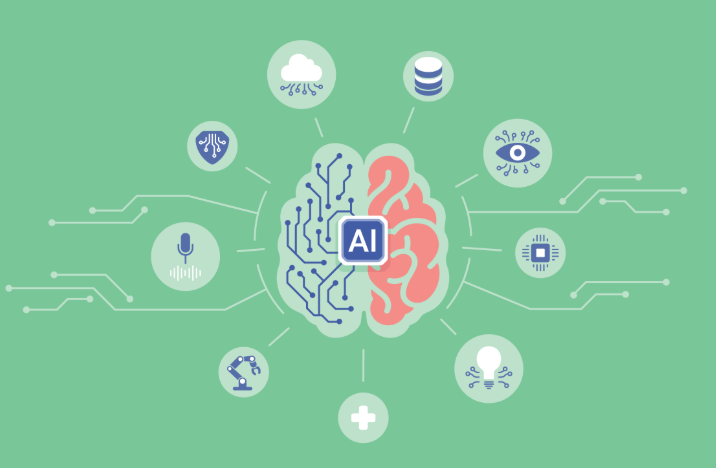
Artificial Intelligence functions through intricate algorithms and statistical models. These systems leverage machine learning to identify patterns within data, both labeled and unlabeled. Neural networks, mimicking the human brain’s architecture, are essential for processing complex information. This framework enables applications like natural language processing and image recognition. As AI technology evolves, its implications for various sectors become increasingly significant, inviting an exploration of its future trajectory and potential challenges.
Understanding Machine Learning
Machine learning, a pivotal subset of artificial intelligence, encompasses a range of algorithms and statistical models that enable systems to learn from data without explicit programming.
It primarily divides into supervised learning, where models are trained on labeled data, and unsupervised learning, which identifies patterns in unlabeled datasets.
This duality enhances adaptability, allowing systems to evolve in diverse, data-driven environments, fostering innovation and autonomy.
See also: linkmposlotmicrostar88
The Role of Neural Networks
Neural networks serve as a cornerstone of modern artificial intelligence, mimicking the structure and function of the human brain to process complex data.
This innovative neural architecture enables deep learning, allowing systems to recognize patterns and make decisions autonomously.
Natural Language Processing Explained
Natural language processing (NLP) emerges as a vital component of artificial intelligence, building upon the capabilities of neural networks to interpret and generate human language.
By employing techniques such as sentiment analysis, NLP enables systems to discern emotional undertones within text, enhancing user interaction.
Additionally, text generation features empower machines to create coherent and contextually relevant content, revolutionizing communication in various applications.
The Future Impact of AI Technology
The evolving landscape of artificial intelligence (AI) technology holds profound implications for various sectors, reshaping industries and societal norms.
As technological advancements accelerate, AI ethics emerge as a critical concern, particularly regarding job displacement and economic implications.
Furthermore, privacy concerns will intensify amid widespread adoption, prompting necessary discussions on societal changes and regulatory frameworks to ensure responsible integration of AI into everyday life.
Conclusion
In conclusion, artificial intelligence represents a monumental leap in technological evolution, reshaping industries across the globe. Its intricate algorithms and deep learning capabilities enable machines to process and analyze data with unprecedented efficiency. As natural language processing and neural networks continue to advance, AI’s potential seems boundless, promising to revolutionize human interaction and decision-making. The future of AI technology is not just bright; it is akin to opening a Pandora’s box of endless possibilities for innovation and discovery.